The History of Mokumé Gané
From Japan to the United States
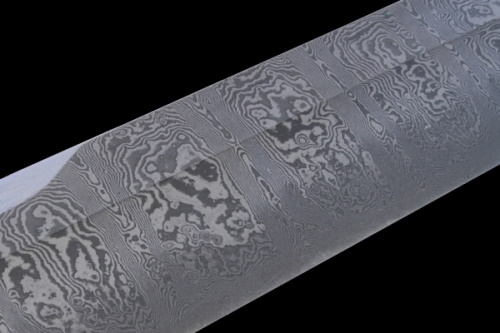
Mokume Gane is a technique of Japanese origin in which layers of alternating colors of precious metals are fused, forged, and patterned to create swirling color images in a sheet of metal. Mokume (wood eye) Gane (metal) is derived from the ancient Japanese sword-making technique wherein layers of mild steel and carbon steel were forged together to create blades of great strength and durability. A fine woodgrain pattern on a blade is the tell-tale sign of Damascus steel.
The Origins of Mokume Gane in Japanese Metalworking
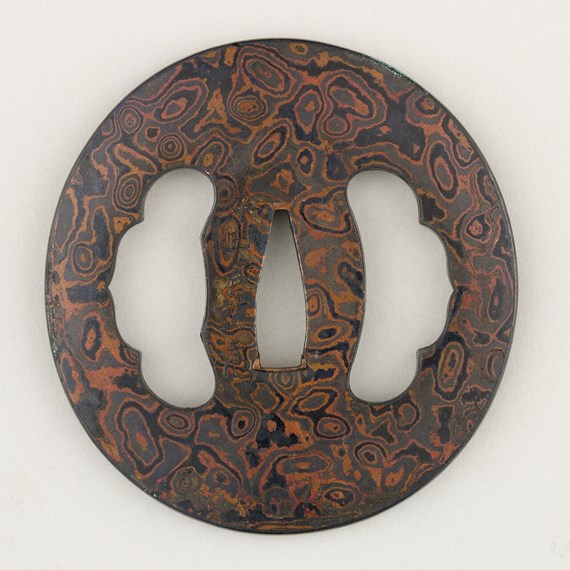 Image courtesy of Metropolitan Museum of Art, CC0, Gift of C.O. von Kienbusch, 1914 via Wikimedia Commons
The first recorded use of mokume gane was by Denbei Shoami (1651-1728), who lived and worked in Japan. Shoami adapted the principles of forge-welded Damascus steel to create mokume gane. Advanced sword-making techniques used in Japan at the time were pivotal in the development of mokume gane, because the art of sword-making was so accomplished that it directly influenced all forms of metalwork.
The importance placed on swords in feudal Japan, and the influence of sword-makers on Japanese art and technology, are not unlike the leading role the aerospace industry plays in driving technological advances today. Swords were considered highly utilitarian and highly decorative, and the finest artists and metalworkers of the day worked side by side to create swords of great beauty and remarkable functionality. Master-apprentice relationships allowed for extensive knowledge of metallurgy to be passed down and expanded. Materials were readily available, and colored metal alloys were already in use at the time.
Traditional Mokume Gane Techniques and Materials
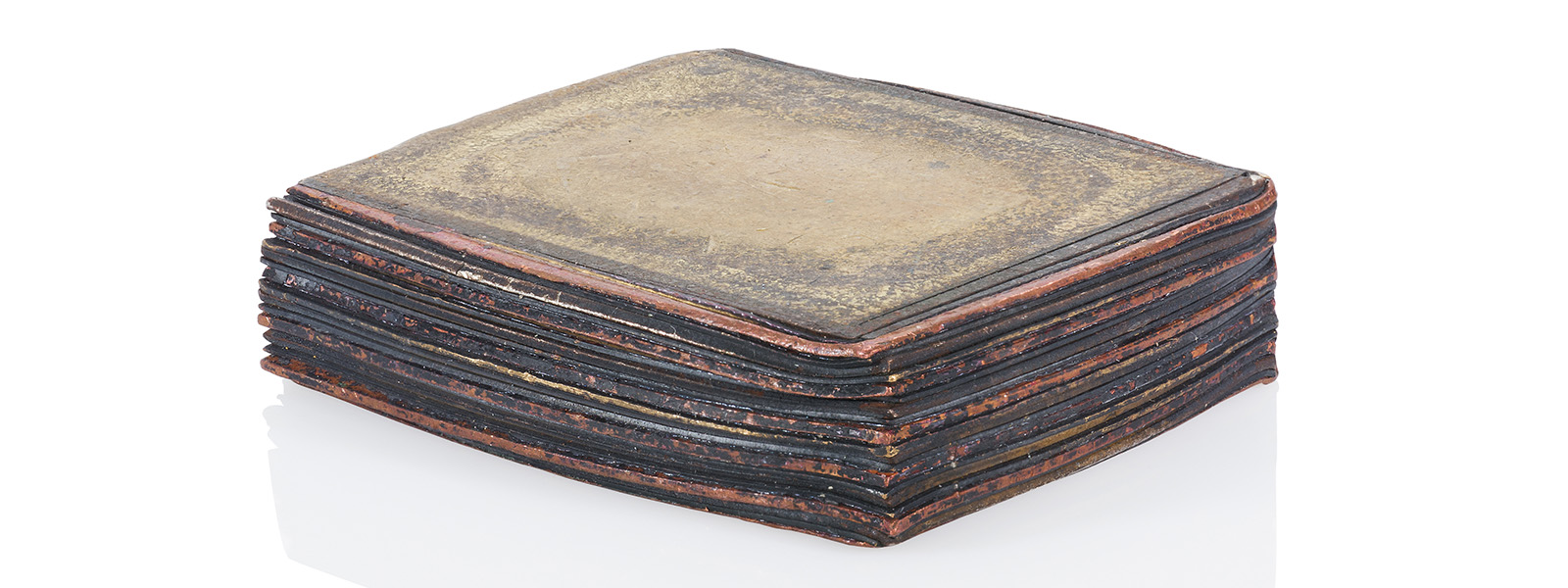
To achieve successful lamination of a mokume billet using the original process required a highly skilled smith with extensive experience. The traditional materials used were relatively soft precious metals and alloys - gold, copper, silver, shakudo, shibuichi, and kuromido - which would form liquid phase diffusion bonds with one another without completely melting. After the metal sheets were stacked and carefully heated, the solid billet of simple stripes could be forged and carved to increase the pattern's complexity.
Modern Mokume Gane Rings and Contemporary Jewelry Artistry
The modernized process typically uses a controlled atmosphere in a controlled, high-temperature furnace. Mechanical aids, such as a hydraulic press or torque plates (bolted clamps), are also commonly used to apply compressive force to the billet during lamination and to enable lower-temperature solid-state diffusion between the layers.
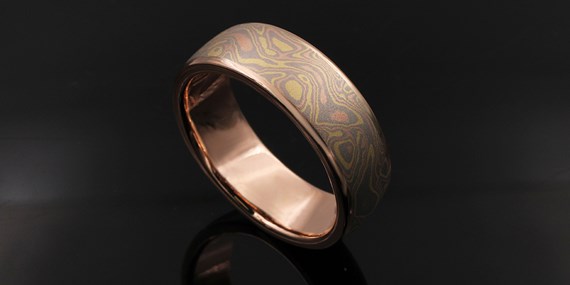
Contemporary metalsmiths have rediscovered mokume gane as an expressive material with a subtle palette of precious metal colors. Due to the labor-intensive nature of fine mokume jewelry, it will remain an uncommon jewelry technique, avoiding association with mass-produced commercial jewelry.
Krikawa is an award-winning mokume gane studio and is recognized worldwide as one of the leading mokume ring makers. With clients from Australia through the U.K. to Canada and across all 50 United States, Krikawa has singularly nailed the mokume-gane bridal market with our client-inspired, co-created, one-of-a-kind masterpieces.
Learn About Mokume Gane Ring Care→
Mokume Ring Anatomy→
View our Mokume Ring Collection→
Speak with a Design Consultant→
Frequently Asked Questions About Mokumé-Gane History
When did mokumé-gane originate?
Mokumé-gane developed in Japan around the late 17th to early 18th century. Denbei Shoami (1651–1728) is credited with its first recorded use. The technique grew out of the metalworking skills used to make and decorate swords.
Who was Denbei Shoami?
Denbei Shoami was a Japanese metalworker credited with the first recorded use of mokumé-gane. He adapted principles of forge-welded steel to create patterns in layers of contrasting metals.
Was mokumé-gane originally used to make sword blades?
Mokumé-gane was used to decorate sword fittings, such as guards and hilts. The patterned steel associated with blades was an influence on its development, but mokumé-gane brought that visual idea to layers of colored metals.
Why were swords important to the development of mokumé-gane?
In feudal Japan, swords were both functional objects and works of art. Skilled swordmakers and decorative metalworkers worked in a culture that valued both qualities. Their knowledge of forging and patterned metal helped make techniques such as mokumé-gane possible.
What metals did traditional mokumé-gane makers use?
Traditional makers used gold, copper, silver, and Japanese alloys including shakudo, shibuichi, and kuromido. They chose metals that could bond in layers and reveal contrasting colors when patterned.
How does modern mokumé-gane making differ from the traditional process?
Traditional makers relied on careful heating and extensive hands-on experience to bond and work the layers. Modern metalsmiths can use controlled furnaces and tools such as presses or bolted plates to manage heat and pressure more precisely. The patterned metal still requires skilled work.

