Multi-Color Gemstones for Engagement Rings
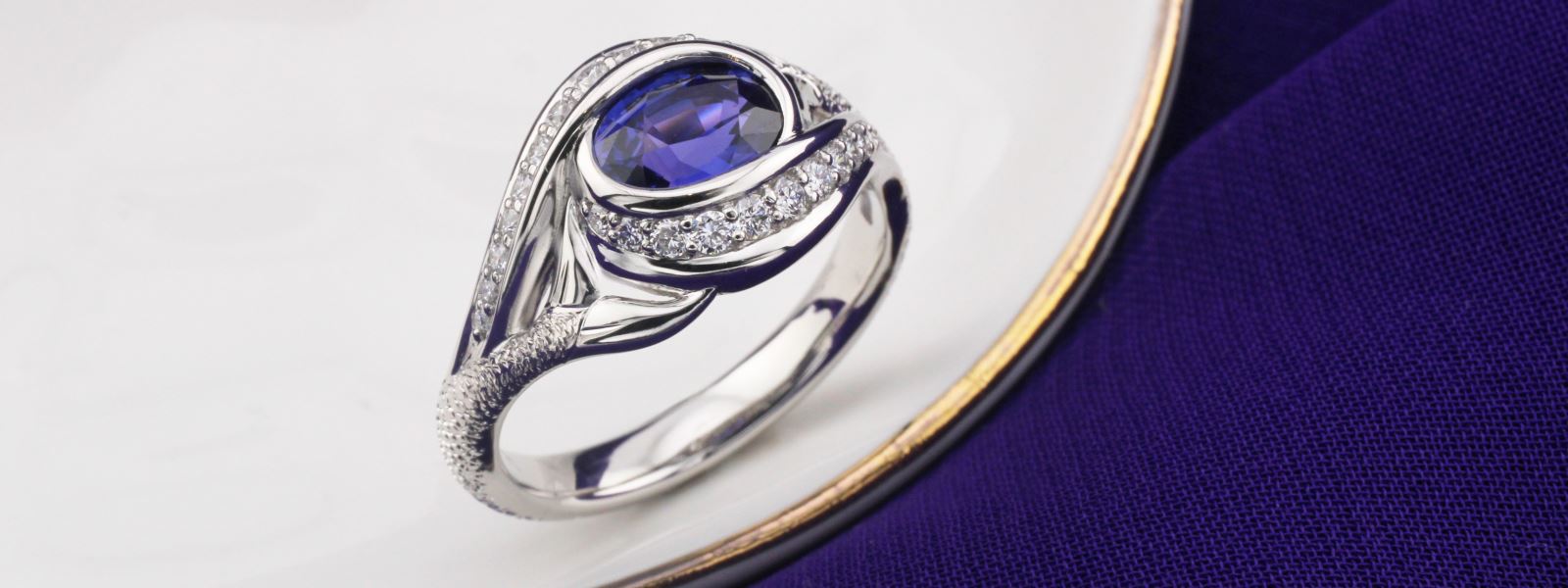
Parti-Color, Bi-Color and Color-Change Gemstones
Why settle on one color when a gemstone can give you two, three, or even appear to transform entirely depending on the light? Multi-color gemstones are among the most distinctive center stones for engagement rings because their beauty lies in their variation. A sapphire may transition from deep ocean blue into green and gold. A tourmaline can contain pink and green within the same crystal. An alexandrite may appear greenish in daylight and shift toward red or purple under warmer evening light.
For someone drawn to an engagement ring that feels truly individual, these gemstones offer something traditional uniformly colored gems cannot. Their color patterns developed naturally as the crystals formed, and the exact arrangement is extraordinarily difficult to duplicate. The gemstone itself becomes part of the story and often the starting point for the entire ring design.
What Makes a Gemstone Multi-Color?
There are several different ways a gemstone can display more than one color, and the terminology can be confusing. The simplest distinction is whether you can see the colors at the same time or whether the gemstone appears to change color under different lighting.
Parti-Color Gemstones and Sapphires
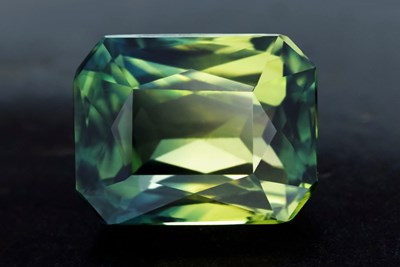
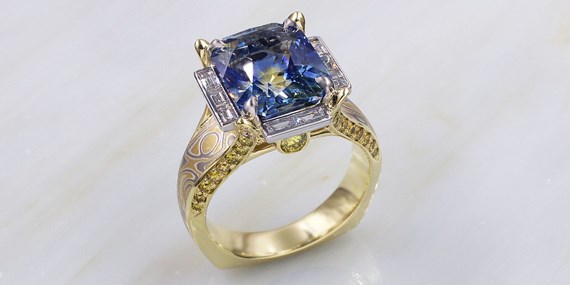
A parti-color gemstone contains two or more visibly distinct colors or color zones within the same stone. Parti-color sapphires are perhaps the best-known example, with combinations that may include blue, green, yellow, teal, violet, or pink. Some have bold sections of contrasting color, while others blend gradually from one hue into another.
Bi-Color Gemstones and Sapphires
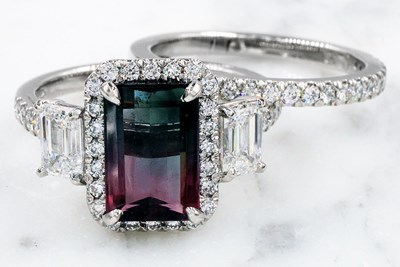
The term bi-color simply describes a gemstone containing two colors. A bi-color stone is therefore a type of parti-color gemstone. Tourmaline is especially famous for this effect, sometimes growing with a dramatic pink section beside green or with several bands of color running through the same crystal.
These patterns result from color zoning, which occurs when the chemistry surrounding a growing crystal changes over time. Different trace elements or changes in concentration can influence the color of different portions of the crystal. In a traditionally colored sapphire, cutters may try to minimize obvious zoning so the finished stone appears more evenly colored. In a beautiful parti-color sapphire, however, that same zoning becomes the feature. The cutter intentionally works with the natural distribution of color to create an appealing composition.
Color Change Gemstones and Sapphires
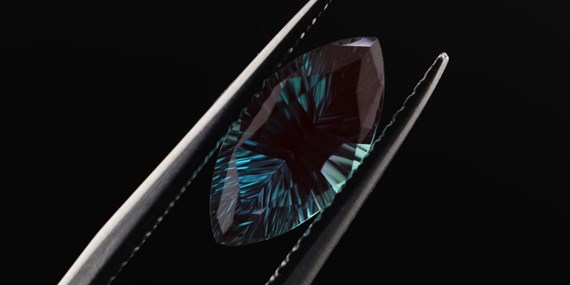
A color-change gemstone is different. Instead of showing separate areas of color at the same time, it appears to change when the type of light changes. Alexandrite is the classic example, often appearing green to bluish-green in daylight and shifting toward red, purple-red, or reddish-purple under warmer incandescent light. Color-change sapphires, garnets, and even some spinels can produce their own transformations.
You may also hear the word pleochroism when shopping for colored gemstones. Pleochroism means a gemstone can show different colors when viewed from different crystal directions. This is not the same as true color change. If a gem changes appearance primarily when you rotate it, pleochroism may be responsible. If it shifts when you move from daylight into warm indoor lighting, you may be seeing color change. Some remarkable gemstones can exhibit both.
The Best Multi-Color Gemstones for Engagement Rings
Sapphire
For daily wear, parti-color sapphire is one of our favorite choices. Sapphire ranks 9 on the Mohs scale and is generally an excellent engagement-ring gemstone when it is structurally sound. Parti sapphires can combine blue, teal, green, yellow, violet, pink, and other hues in patterns ranging from clearly divided sections to soft watercolor-like transitions. Because the cutter can dramatically influence which areas of the rough appear face-up, the cut and color pattern should be considered together rather than separately.
Color-change sapphire offers the same excellent durability with a completely different personality. Rather than presenting several colors at once, these sapphires respond to their lighting environment. A stone might look blue or violet in daylight and shift toward purple or pinkish-purple under warmer light. Some changes are subtle, while others are striking enough that the gemstone can look almost completely different from day to evening.
Alexandrite
Alexandrite is one of the most extraordinary options for someone who wants true color change. This rare variety of chrysoberyl is famous for shifting between greenish and reddish or purplish colors depending on the light source. It is also an excellent engagement-ring stone, ranking 8.5 on the Mohs scale with very good toughness. Fine natural alexandrite with a strong, attractive color change can be exceptionally rare, particularly in larger sizes, which contributes to its desirability.
Tourmaline
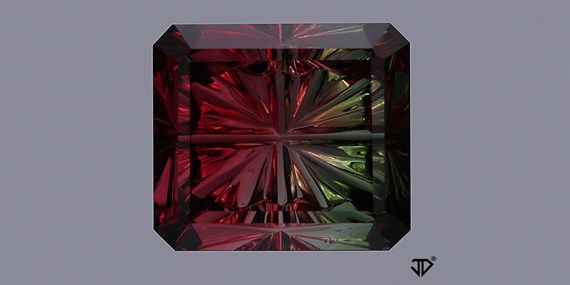
For more dramatic areas of contrasting color, tourmaline gives nature a much larger palette to work with. Pink and green bi-color tourmalines are especially recognizable, while watermelon tourmaline displays a pink or reddish interior surrounded by green. Tourmaline ranks approximately 7 to 7.5 on the Mohs scale, so it requires a little more care than sapphire or alexandrite, but a thoughtfully chosen stone in a protective setting can still make a spectacular engagement ring.
Ametrine
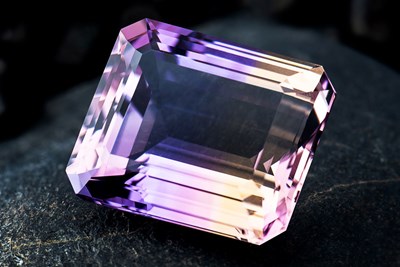
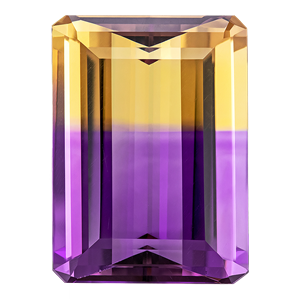
Ametrine naturally combines the purple of amethyst with the golden yellow or orange tones of citrine in a single quartz crystal. The colors may meet in a relatively sharp division or flow more gradually through the stone. Because the color relationship is the main attraction, cutters often use shapes and faceting patterns specifically chosen to highlight both halves of the gem. With a Mohs hardness of 7, ametrine is better suited to a wearer who is willing to be somewhat mindful with their ring.
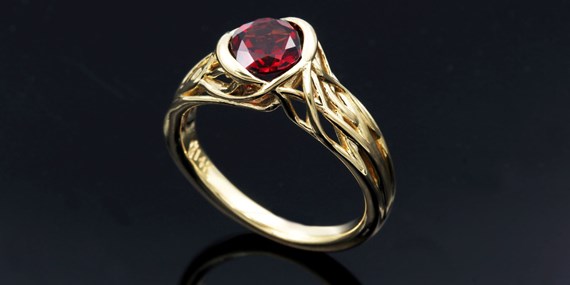
Garnet
Color-change garnet is another fascinating and much less expected choice. Depending on the particular stone, garnets can shift between greenish, bluish, pink, purple, orange, and reddish hues as the illumination changes. Because garnet is generally softer than sapphire and alexandrite, the gemstone's species, condition, and setting style should all be considered when designing a ring for frequent wear.
Spinel
Color-change spinel can also occasionally be found. Spinel ranks 8 on the Mohs scale and has good toughness, making it one of the more durable colored gemstone choices. Fine examples with a noticeable and beautiful change are uncommon, which makes finding the right one part of the adventure.
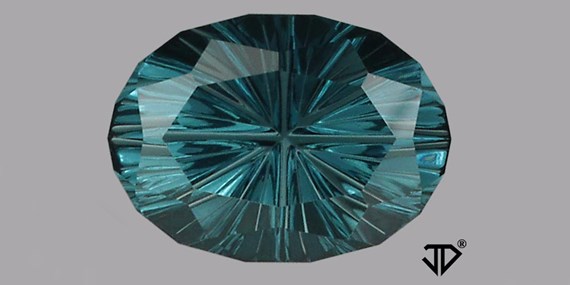
Choosing the Right Multi-Color Gemstone
Selecting one of these stones is less about finding an established ideal and more about finding a composition you cannot stop looking at.
With a parti-color gemstone, pay attention to how the colors relate to one another. There is no rule that says a gemstone must contain equal portions of each hue. One stone may be divided almost perfectly between blue and green, while another may be predominantly blue with a small sweep of yellow that completely changes its personality. Neither is inherently better. The most important question is whether the overall pattern feels balanced, intriguing, and beautiful to you.
Cut becomes especially important because the orientation of the rough determines how those natural color zones appear through the top of the finished gem. An unusual proportion or shape may have been selected specifically because it captured the most extraordinary arrangement of colors. With these stones, maximizing beauty can be more important than forcing the rough into a conventional shape.
Color-change gemstones need to be evaluated differently. They should always be viewed under several light sources before you make a decision. A photograph showing the gemstone at its most dramatic only tells part of the story. At Krikawa, we like to view gemstones and provide videos in different lighting environments so you can understand how they actually behave throughout a normal day. The goal is not merely to love the most impressive version of the gemstone. You should enjoy all of its personalities.
It is also worth considering the strength of the change itself. Some gemstones transition dramatically from one distinct color family into another. Others shift gently between related shades. A dramatic change can contribute to rarity and value, particularly with fine alexandrite, but subtle transformations can be equally beautiful when the colors themselves are appealing.
Designing Around More Than One Color
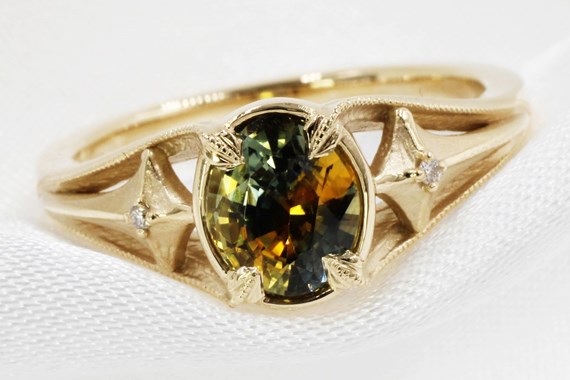
Multi-color gemstones become especially exciting in custom jewelry because the ring can be designed around the exact stone rather than treating the center gem as an interchangeable component.
The metal can influence which colors command attention. Yellow gold may beautifully complement golden or green areas within a parti sapphire, while platinum or palladium white gold can create a cooler backdrop for blue and teal. Rose gold can interact beautifully with pink, peach, violet, and warmer color zones.
Accent gemstones can also be selected to echo one particular hue within the center stone or deliberately contrast with it. Even the placement of prongs matters. If a parti sapphire contains one spectacular flash of yellow, green, or blue near its edge, covering that exact spot with metal would lose part of what made the gemstone special in the first place.
This is one of the reasons we love beginning the custom design process with the actual center stone in hand. Its proportions, color placement, personality, and even its quirks can influence the architecture of the finished ring.
Are Multi-Color Gemstones Lower Quality?
Not at all. They simply ask us to look at gemstone beauty through a different lens.
Traditional gemstone evaluation often rewards even color. In a classic blue sapphire, for example, prominent uneven color zoning may be considered less desirable because the goal is usually a consistent face-up blue. Parti-color gemstones intentionally turn that convention around. Their zoning is not something to hide. It is exactly what makes them fascinating.
That does not mean every unevenly colored stone is automatically rare or valuable. A beautiful parti-color gemstone still needs an appealing combination of hues, an attractive overall pattern, thoughtful cutting, good polish, and an internal condition appropriate for the way it will be worn. Similarly, not every gemstone labeled color-change will undergo a dramatic transformation. The quality of the phenomenon matters just as much as the presence of it.
The appeal is that these stones are not trying to conform to a single visual ideal. Their natural differences are the point.
Is a Multi-Color Engagement Ring Right for You?
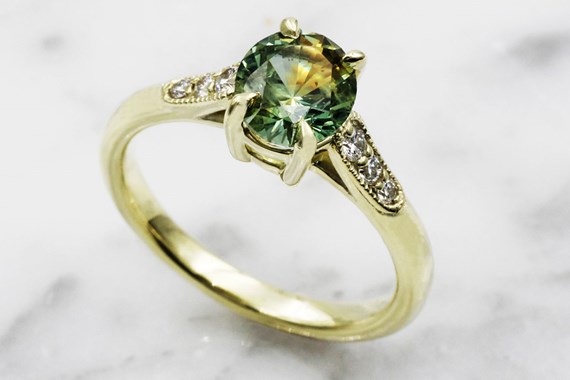
A multi-color gemstone may be perfect for you if choosing just one color has always seemed a little too limiting.
Perhaps you love the place where blue and green meet inside a parti sapphire. Maybe you want an alexandrite that seems to become a different gemstone after sunset. Or perhaps a pink and green tourmaline looks like a tiny abstract landscape that happened to grow underground.
These gemstones celebrate something remarkable about natural materials: variation does not always need to be corrected. Sometimes it is exactly what makes a gemstone extraordinary.
A traditionally colored gemstone may be chosen because it beautifully represents an ideal. A multi-color gemstone is often chosen because there may never be another one quite like it.
And when the engagement ring is designed specifically around that individual stone, its colors, transitions, contrasts, and transformations become part of a ring that could only ever be yours.
